


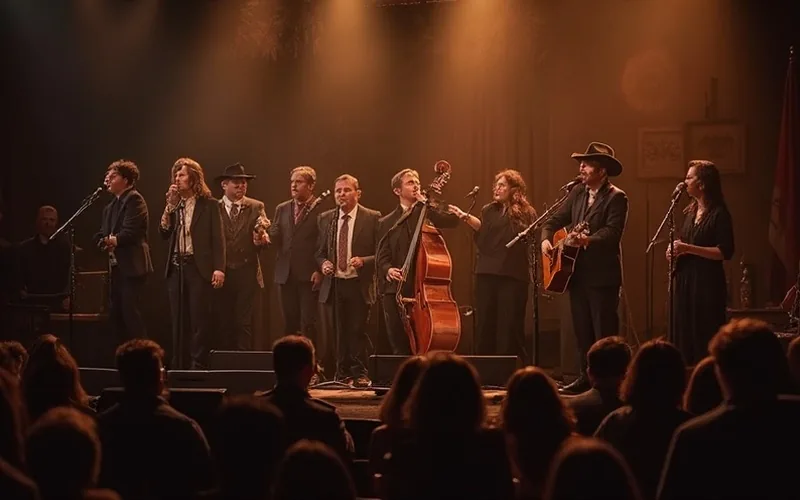
Did you know the Kingsmen sang backup for George Jones on a few songs for a television show? JD Sumner and the Stamps did that for Elvis. The Imperials did the same.
The Speer Family, in the early years, did both gospel and patriotic songs. Various Southern Gospel artists have filled in for members of the Oak Ridge Boys when they’ve been sick. The Statler Brothers would attend various gospel concerts and even held George Younce as a hero of theirs. Harold Reid, famed bass singer of the Statlers, offered George a kidney when Younce was having severe health issues.
JD Sumner and many of the early quartets would be musical acts in some early black-and-white westerns. Gaither has done videos with George Jones, Ronnie Milsap, and the Gatlins. Search on YouTube and you’ll probably find some that I have missed.
The partnership between gospel and country has always been strong. Many of the artists who step on the stage of the Grand Ole Opry are strong believers. Many gospel singers became believers while with a group or quartet.
Gospel music must return to those partnerships. The audience those artists have needs to hear our music and, let’s be honest, hardly anyone listens exclusively to one format of music. I love Southern Gospel, but I also enjoy country, hits from the ’80s, Josh Groban, Frank Sinatra, and so on. Every genre of music shares listeners with another genre of music. With that truth before us, why not capitalize on it?
For this format to thrive, it must create strategic partnerships. Some groups should do some dates with country artists. Country artists should appear at gospel music’s large festivals. If my notion is correct, it would boost ticket sales to those events.
Some will read this and say, “But wouldn’t that compromise the ministry of the gospel artists?” I would say it would not. It would take their message to those who desperately need it. Most gospel concerts now occur in churches. Most of those who attend church already believe the message of gospel artists. Wouldn’t it be beneficial to partner with those who have audiences who don’t believe?
Also, by introducing new people to this music, the genre has a shot at continuing. Currently, many gospel artists are not full-time on the road. They have other jobs and must limit travel. Other groups struggle financially to stay on the road. This industry needs an influx of listeners.
The future of this music is at stake. Will we take some chances, or will we continue to do the same things we’ve already done and hope for different results? Who will be bold?
The future is up to us,
Brian Sanders
Gospel Gold